Table of Contents
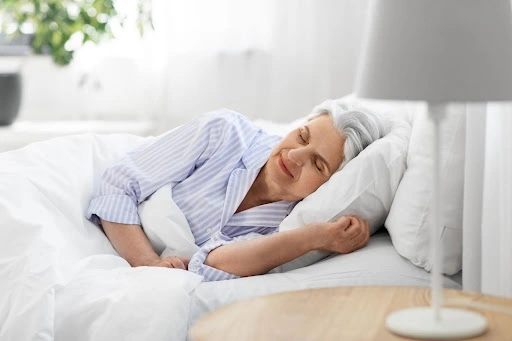
Living with bronchiectasis means finding ways to support your lungs around the clock, including how you sleep. Nighttime can often bring increased coughing, shortness of breath, or mucus buildup, which is why your sleeping position matters more than you might think. The right posture can make a big difference to your comfort and respiratory health.
In this article, we’ll look at how to sleep with bronchiectasis so you can get some well-deserved rest.
Why Your Sleep Position Matters
Bronchiectasis causes damaged and widened airways, leading to mucus accumulation. While you sleep, both gravity and body positioning affect how mucus does or doesn’t drain. Sleeping in positions that help mucus drain naturally can help reduce nighttime coughing, meaning you can get more sleep.
Read about the different types of bronchiectasis and why the distinctions matter.
Best Sleeping Position for Bronchiectasis
1. Elevated Upper Body (Semi-Fowler’s Position)
Sleeping with your upper body elevated at a 30 to 45-degree angle, either with pillows or an adjustable bed.1 This position can ease breathing by taking pressure off your diaphragm and chest.
2. Side-Sleeping
Try sleeping on your side.2 Doing so helps with better oxygen exchange while allowing your lungs to drain more effectively. You may need to change the position depending on your symptoms and how your lungs are affected.
3. Prone (Stomach Sleeping)
While it’s not ideal for everyone, some find relief sleeping on their stomachs.3 This position can reduce lung compression and help secretions move more easily. However, you may want to discuss this with your healthcare provider and make sure it’s safe with your specific condition!
5 Tips for Better Sleep with Bronchiectasis
- Use a Humidifier. Adding moisture to your room can help loosen mucus and reduce irritation in your airways.
- Stick to a Routine. Going to bed and waking up around the same time each day can improve sleep quality and lung health over time. You might also want to limit naps during the day so you’re more likely to get a full night’s sleep.4
- Limit Caffeine and Heavy Meals at Night. Both of these can trigger reflux or worsen coughing, making it harder to fall or stay asleep.
- Incorporate Exercise Into Your Routine. Regular exercise can also promote a good night’s sleep. Just be sure not to exercise too close to bedtime.
- Practice Airway Clearance Before Bed. Using airway clearance therapies, including SmartVest, before sleep, can help clear mucus and reduce nighttime symptoms.
Bronchiectasis and Sleep Apnea
Bronchiectasis and sleep apnea are two respiratory conditions that can significantly impact breathing during sleep, and research suggests they often occur together. Studies show that people with bronchiectasis are more likely to experience sleep-disordered breathing, including obstructive sleep apnea (OSA). In fact, one study found that up to 40-60% of bronchiectasis patients also had signs of OSA.5
This combination can take a toll on fatigue, oxygen levels, and overall respiratory health. If you suspect you have both conditions, especially if you experience loud snoring, daytime sleepiness, frequent nighttime awakenings, or difficulty breathing, talk to your doctor.
A sleep study and pulmonary function testing can help guide the right treatment plan, including airway clearance therapy, CPAP use, and lifestyle adjustments.
SmartVest and Sleep: A Supportive Pair
Regularly using SmartVest vest therapy can help loosen and mobilize mucus. When combined with strategic sleep positioning, you can develop a routine that promotes better breathing and better sleep.
Want to learn more? Talk to your healthcare provider about incorporating SmartVest into your treatment plan, and explore sleeping positions that work with, not against, your lungs.

Resources
- European Lung Foundation. “Bronchiectasis Self-Care Guide.” Retrieved from https://europeanlung.org/wp-content/uploads/2023/06/Bronchiectasis-self-care-guide.pdf
- Cleveland Clinic. “Breathing Problems? Try These Sleep Positions.” Retrieved from https://health.clevelandclinic.org/best-sleeping-position-for-breathing-problems
- Sleep Foundation.” Best Sleeping Positions for Breathing Problems.” Retrieved from https://www.sleepfoundation.org/sleeping-positions/best-sleeping-position-for-breathing-problems
- European Lung Foundation. “Bronchiectasis Self-Care Guide.” Retrieved from https://europeanlung.org/wp-content/uploads/2023/06/Bronchiectasis-self-care-guide.pdf
- Chest Journal. “Characterization and outcomes in patients with bronchiectasis and obstructive sleep apnea with positive airway pressure therapy.” Retrieved from https://journal.chestnet.org/article/S0012-3692(24)00976-0/fulltext